 Call: (740) 815-2629



- Central Ohio
Serving all of Central Ohio and the surrounding areas, residential and commercial.
- Licensed & Insured
Free estimates on every project, big or small. Call or text (740) 815-2629.
 Central Ohio
 Licensed & Insured
Excavation & Site Prep in Central Ohio
Excavation is where most builds start: the ground gets opened, moved and put back right before anything goes up on it. We do excavation and site prep across Central Ohio for homes, pole barns, garages and commercial lots, for homeowners and for builders, and have since 2023. Here that means heavy clay ground, buried lines marked before the digging, and a plan for every load of dirt.
From small residential projects to large site work, the aim is the same. As we like to put it, "Built on quality. Finished the right way."
What Excavation Means on a Building Site

Excavation means moving earth: digging it out, putting it where it is needed and hauling off what is left over. In construction it covers everything from stripping the topsoil off a house site to cutting a trench for a water line, then backfilling and grading so the ground is ready for what's next.
Most excavation work on a home or farm site comes down to a few kinds of digging:
- Topsoil stripping: the dark top layer comes off the building spot and is set aside.
- Cut and fill: the ground is cut down or built up for a building, a pad or a drive.
- Trenching: a narrow cut for a water line, conduit or drain pipe.
- Backfill and grade: soil goes back in, is packed down and shaped.
Before Any Digging: 811 and a Plan
Ohio law sets the order. Under ORC 3781.28, the excavator notifies the protection service, Ohio811, "at least two working days, not including the day of the notification, but not more than sixteen calendar days before commencing excavation."
In plain words: underground lines are marked before any digging starts. Call 811. That is the first part of excavation safety, because the marks show where gas, power, water and phone lines run so the digging can work around them.
A few more things are worth settling with you before the first bucket of dirt moves:
- Where the house or building sits, and where the drive comes in
- Where the topsoil waits, and where the spoils go
- Where the buried lines run, once they are marked
- The weather, because clay behaves very differently wet and dry
Clay Ground in Delaware County
The USDA NRCS soil survey for Delaware County rates 87.8% of the county's acres "very limited" for shallow excavations. It also finds 81.6% with a subsoil layer of 35% clay or more. Those are NRCS's numbers, and they match what the ground does under a bucket.
Heavy clay holds water. In a wet spring it turns to mud, a machine on soaked ground leaves deep ruts, and an open trench can fill with water. When the ground is that wet, waiting for it to dry is often the right call.
Clay also has to go back into a trench with care. Backfill is placed and packed as it goes, or it settles over the winter and leaves a low spot that holds water. Freeze-thaw winters find every soft spot left behind.
How a Site Prep Job Goes
Every site is different, but most jobs run through the same steps from start to finish:
- Clear the spot. Trees, brush and stumps come out first; on a wooded lot that starts with land clearing.
- Strip the topsoil. It is set aside for the final grade instead of being buried under fill.
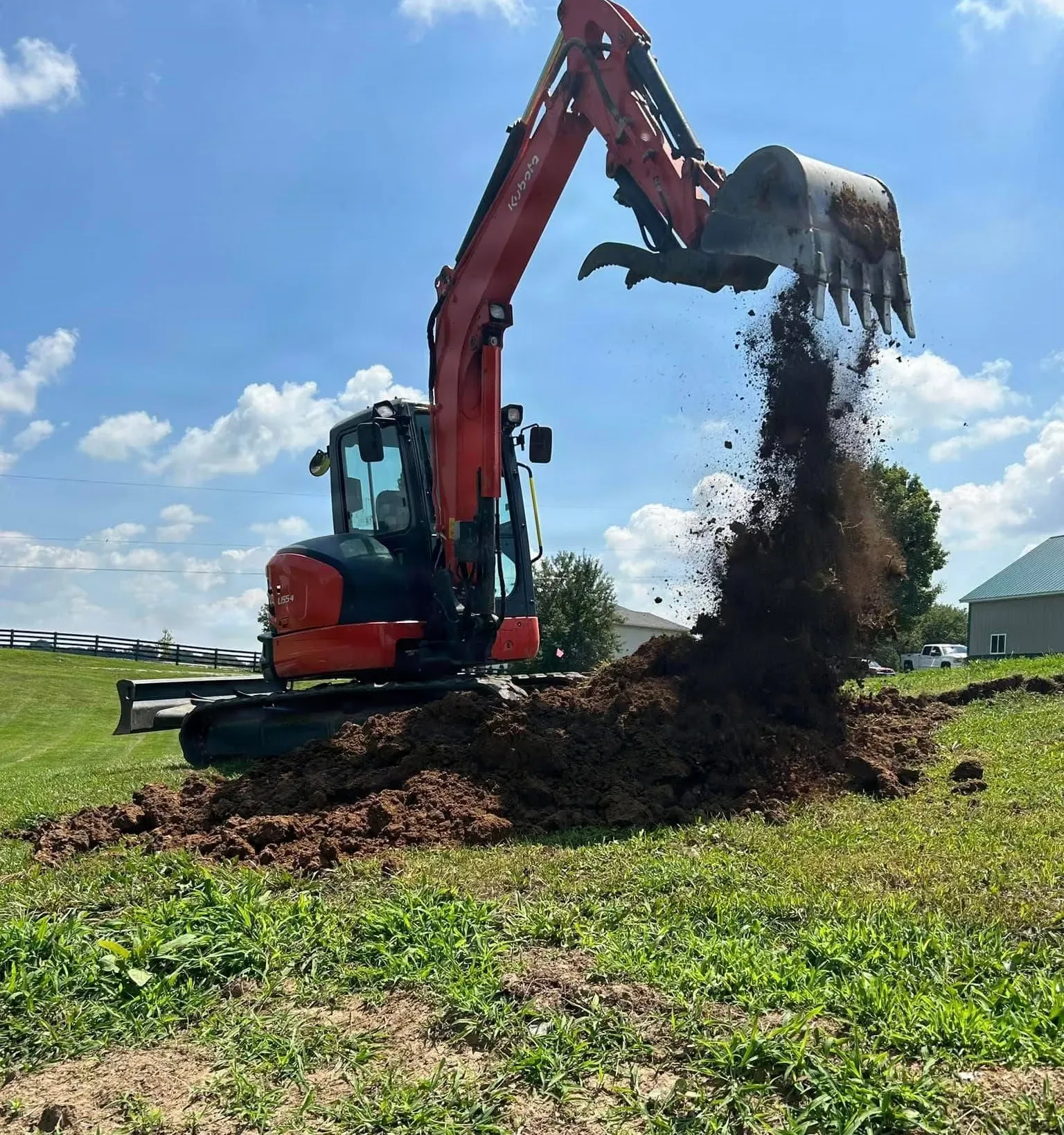
- Dig. A mini excavator handles trenches and tight spots, and skid steers move and spread material.
- Haul off the spoils. Extra dirt, rock and debris leave the site, or go where you want fill.
- Backfill and compact. Soil goes back in and is packed down so it stays put.
- Rough and final grade. The ground is shaped so water runs away from the building, the same work as our grading jobs.
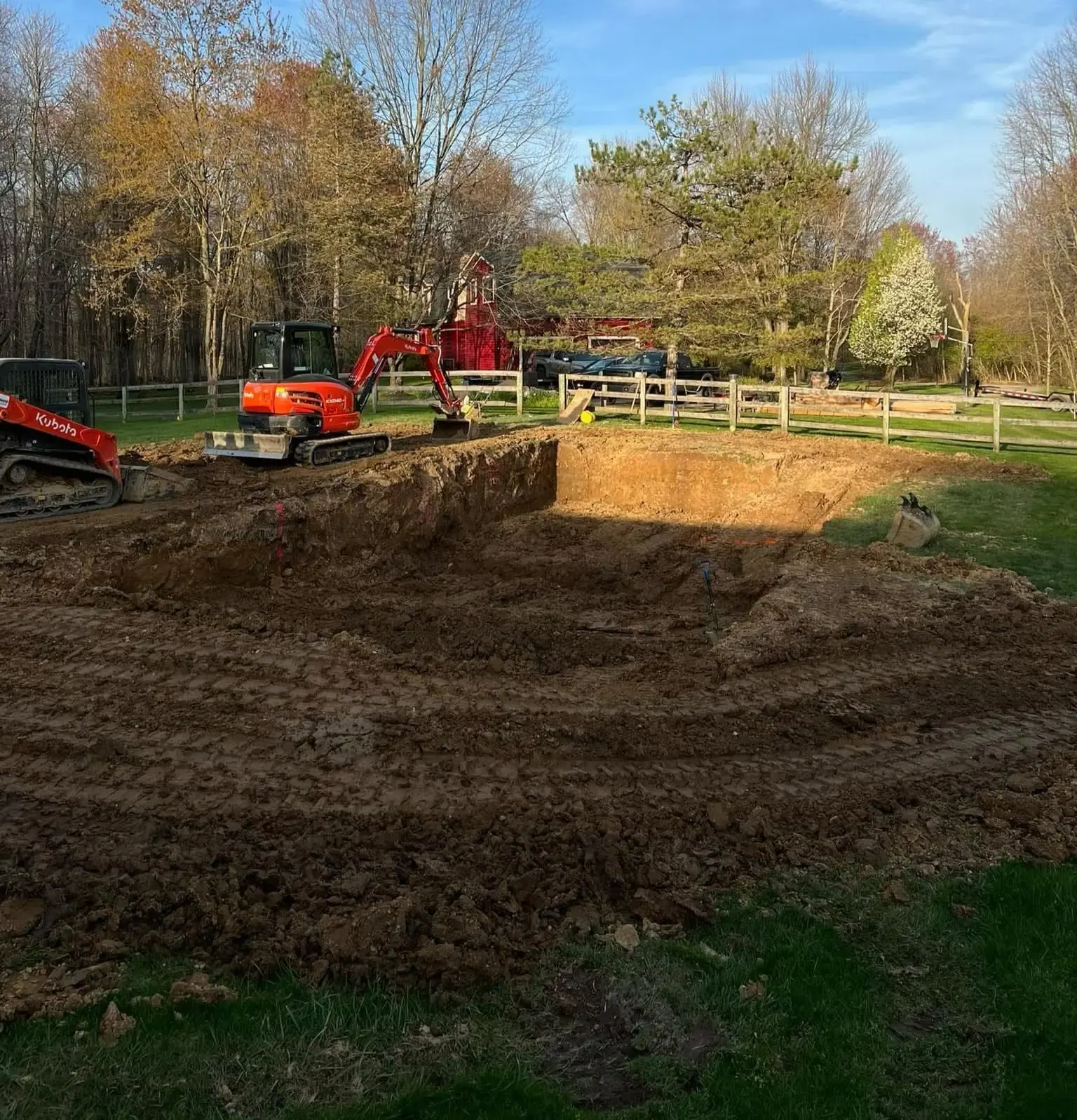
A recent new build shows the end of that list. We hauled away the rest of the spoils from the basement excavation, cleaned up the yard and shaped it to final grade, ready for grass seed.
More Excavation Work We Take On
Site prep covers more than the hole for a foundation. Other jobs on our list:
- Construction entrances and access roads, so trucks and machines get in without tearing up the yard
- Concrete tear-out and removal
- Building and shed pads for a garage, pole barn or shed
- Trenches for water lines and conduit
- An old house, barn or garage taken down first with demolition
The jobs run from small to big. On one farm we cleaned up an area so it could be fenced and used for cattle: 6 loads of old dirt and concrete hauled out, and stone brought in by the doors so that spot is not so muddy. On one big project the crew cleared 2.5 acres and took down 2 full houses.
“Deim's did a great job of cleaning out our pond and clearing out some overgrown patches on our property.”
Bess D., Facebook recommendation
We are licensed and insured, and we treat every property like it is our own.
What Decides the Cost of Excavation
How much excavation costs depends on the job, and there is no fair number until someone looks at the ground. What decides it:
- The size of the job and how much earth moves
- The ground, and how wet it is
- Trees and brush that have to come out first
- What has to be hauled in or out, and the material, like stone
- Access for the machines
We come out, look at the job with you and give you a free estimate. We work within about 45 miles of Sunbury, from Westerville and Columbus out to the country lots.
Ready to Break Ground?
Call or text (740) 815-2629 for a free estimate.
Photos From Our Jobs
Every photo here is from one of our own jobs. Tap one to see it bigger.


Questions We Hear a Lot

-
It depends on the size of the job, the ground and how wet it is, the trees and brush, what has to be hauled in or out, access for the machines and the material. We look at the job with you before giving a number. Call or text (740) 815-2629 for a free estimate.
-
Sometimes, but not always. Most of the subsoil around here is heavy clay that turns to mud in wet weather, and machines on soaked ground leave ruts and soft spots. We look at the ground with you and plan the digging around it.
-
Topsoil is set aside and spread back at final grade. Extra dirt, rock, old concrete and debris from the job are hauled off, or spread where you want fill on the property. We sort that out with you before the digging starts.
-
Yes. We prep sites for builders and homeowners: clearing, topsoil, digging, spoils, backfill and final grade, for homes, pole barns, garages and commercial lots.
-
Yes. Estimates are free. Call or text (740) 815-2629, or send the form on our contact page, and tell us about the job (photos help).
Ready to Get Started?
Call or text Deim’s Dirt Works at (740) 815-2629 for a free estimate.
-
- Service Area All of Central Ohio
& surrounding areas - Free Estimates Call or text usLicensed & insured
- Find Us Online


